
Same Prompt, More Complete Prints: Meshy.ai Publishes Printability Benchmark for AI-Generated 3D Models
SILICON VALLEY, Calif., Nov. 13, 2026
Press Release Disclaimer: This is a press release distributed through the XPR Media network. It has not been independently verified by our newsroom.

Same Prompt, More Complete Prints: Meshy.ai Publishes Printability Benchmark for AI-Generated 3D Models
PR Newswire
SILICON VALLEY, Calif., Nov. 13, 2026
In an FDM print test, Meshy.ai’s Make Printable feature cut prints with major missing features or holes from 44% (11 of 25) to 8% (2 of 25).
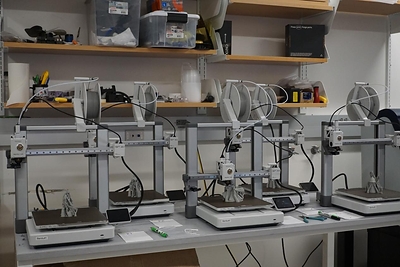
SILICON VALLEY, Calif., Nov. 13, 2026 /PRNewswire/ — Meshy.ai today published the results of a printability benchmark for AI-generated 3D models, carried out in collaboration with the Advanced Digital Design and Fabrication facility (ADDFab) at the University of Massachusetts Amherst. Meshy.ai commissioned and funded the study and supplied six Bambu Lab A1 printers and consumables. Facility participation does not constitute endorsement of Meshy.ai products.
AI-generated 3D models are usually judged by how they look on screen. Once they reach a printer, many fall short: thin wings, fins and panels fail to form or snap off when supports are removed. Meshy.ai built its Make Printable feature to close that gap. Make Printable is Meshy.ai’s print-preparation feature. It repairs mesh defects and reinforces thin features for the selected size and process, and it works on models generated in Meshy.ai and on uploaded models alike.
To see how that holds up on real hardware, Meshy.ai generated models for 25 hard-to-print prompts, and the lab sliced and printed 125 parts on brand-new Bambu Lab A1 printers: the same 25 prompts from five workflows (Meshy 7, Meshy 7 with Make Printable and three other AI 3D generators), using the same settings and filament for every workflow. Engine identities were concealed throughout file preparation, printing and grading. Three experienced 3D printing users scored each part against the lab’s five-criterion rubric, and 17 volunteers ranked the anonymous prints.
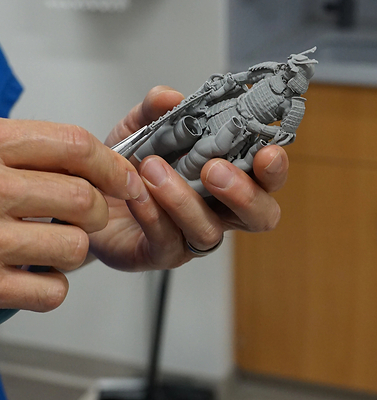
“Many AI platforms can generate 3D models that appear impressive on screen, but producing a printable part requires more than just visual fidelity. The next consideration is design for additive manufacturing, which cannot be reliably assessed from a rendered image alone. The purpose of this study was to evaluate these platforms in practice — by actually 3D printing each part on a consumer FDM printer — and to determine whether they can produce real parts that are both visually convincing and manufacturable,” said Dave Follette, Director, ADDFab, UMass Amherst.
With Meshy 7 alone, 11 of 25 prints (44%) had major missing features or holes. With Meshy 7 with Make Printable, that dropped to 2 of 25 (8%). In the same test, 23 of 25 Meshy 7 with Make Printable prints (92%) had no major missing features or holes, compared with 21 of 25 (84%), 15 of 25 (60%) and 14 of 25 (56%) for three other AI 3D generators. Other defects may remain.
Meshy.ai also ran a larger software assessment of model geometry across 100 prompts. Models with complete, connected surfaces rose from 33.4% for raw Meshy 7 output to 98.8% after Make Printable, averaged across the 100 prompts. This surface check measures detected openings and invalid connections, not physical print success.
“People use Meshy because they want to bring an idea to life, not spend hours repairing a model before they can print it,” said Jessie Bergau, 3D Printing Product and Partnerships Manager at Meshy.ai. “Make Printable helps close that gap. Working with UMass Amherst’s ADDFab Lab gave us a way to test the results beyond the screen, with physical prints evaluated without knowing which tool produced them.”
The study has several limitations. The 25 prompts were deliberately selected to challenge the models’ ability to reproduce delicate features, with priority given to prompts for which competing models were predicted to be too thin to print. The findings therefore should not be interpreted as representative of performance across all prompts. Two Meshy 7 with Make Printable prints, a six-legged insect and a long-finned tropical fish, still had major missing features or holes. The physical test covered FDM printing only. Future testing could extend to SLA, SLS and Full-Color printing.
The full printability study, including methodology, limitations and photos of the misses, is available on the Meshy.ai blog, where readers can also download the complete whitepaper. Make Printable is available now as part of Print Check in Meshy.ai.
Frequently asked questions
How does Meshy 7 with Make Printable change the geometry?
Meshy 7 with Make Printable repairs surface errors and reinforces selected thin regions for the intended print size, rather than enlarging the whole model. Inspect the prepared result before exporting.
Does it guarantee a successful print?
Geometry preparation addresses only part of the process. Material, orientation, support strategy, printer calibration and settings still matter.
Which printing processes can I prepare for?
FDM, SLA and Full-Color presets guide geometry preparation. The benchmark’s physical tests used FDM.
Can I repair a model made in another tool?
Yes. Upload it to Meshy.ai, choose the intended size and printing process, and use Meshy 7 with Make Printable before exporting to your slicer.
Can I use Meshy 7 with Make Printable through the API?
Yes. The Repair Printability API repairs model topology and can reinforce thin walls for a specified size and printing process. It accepts external model files as well as supported Meshy.ai task outputs.
About the study
Meshy.ai commissioned and funded the study and supplied six Bambu Lab A1 printers and consumables. The Advanced Digital Design and Fabrication facility (ADDFab) at the University of Massachusetts Amherst performed file preparation and slicing, printing, support removal and objective grading. Facility participation does not constitute endorsement of Meshy.ai products or an audit of Meshy.ai’s software.
About Meshy.ai
Meshy.ai is an AI 3D multimodal model company. Founded by Ethan Hu, who holds a Ph.D. from MIT, Meshy.ai builds foundation models for AI-powered 3D generation, turning text and images into 3D models for everything from games and film to 3D printing. Meshy.ai serves more than 15 million registered users and over 3,000 companies and educational institutions worldwide. In July 2026, the company raised nearly $400 million in a Series B round at a $1.5 billion valuation, the largest round to date in AI 3D. In September 2026, Meshy.ai became the first AI 3D company to surpass $100 million in annual recurring revenue (ARR). In October 2026, it was the only AI 3D company in a16z’s first ranking of the top 50 consumer AI apps by monthly revenue. Learn more at meshy.ai.
 View original content to download multimedia:https://www.prnewswire.com/news-releases/same-prompt-more-complete-prints-meshyai-publishes-printability-benchmark-for-ai-generated-3d-models-302938840.html
SOURCE Meshy.ai

